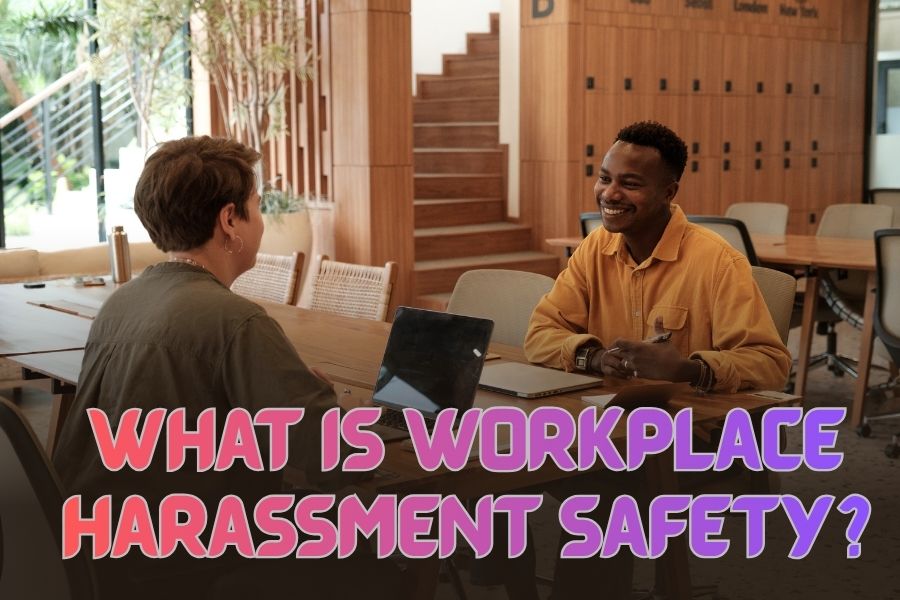
What is workplace harassment safety, and why should you care before a problem becomes severe? It means protecting workers from harassment, threats, intimidation, discrimination, retaliation, and unsafe behavior that can damage health, dignity, productivity, and trust. When you understand the signs early, you can respond with confidence instead of waiting until the workplace feels hostile or dangerous.
Workplace harassment safety connects legal awareness, human respect, and practical prevention. It helps you know what behavior crosses the line, how to report it, and what employers should do to prevent harm. This guide explains the topic clearly for U.S. workers, managers, HR teams, and business owners who want safer workplaces.
What Is Workplace Harassment Safety?
Workplace harassment safety means creating a work environment where people can do their jobs without being targeted, threatened, humiliated, excluded, or abused. It covers behavior based on protected traits, such as race, sex, religion, age, disability, pregnancy, national origin, gender identity, sexual orientation, and genetic information.
It also includes conduct that may not always be illegal but still creates emotional pressure, fear, or workplace disruption. A strong safety approach looks at behavior before it becomes a lawsuit, a resignation, a medical issue, or a violent incident.
You should think of harassment safety as both prevention and response. If a workplace ignores small warning signs, repeated jokes, retaliation, or abuse of power can grow into a hostile environment.
Clear policies help employees understand what is unacceptable, while reporting systems help them speak up without fear. When workplace issues overlap with employment rights, family concerns, business obligations, or health-related stress, trusted legal services for health, family and business-related cases can help people understand the type of support they may need, and employers should still use internal procedures to investigate concerns fairly.
A safe workplace does not mean everyone must agree on everything. It means disagreements should never become insults, threats, slurs, unwanted contact, intimidation, or punishment for speaking up.
Why It Matters
Harassment is a safety issue because people cannot perform well when they feel unsafe. Fear changes how employees communicate, report mistakes, serve customers, and trust leadership.
It also protects employers from serious legal, financial, and cultural damage. A workplace that handles complaints early usually avoids deeper conflict later.
What Behaviors Count As Workplace Harassment?
Workplace harassment can include verbal, physical, visual, digital, sexual, discriminatory, psychological, and retaliatory behavior. It may happen once in a severe situation or repeatedly over time until the workplace becomes intimidating, abusive, or offensive.
Common examples include slurs, insults, offensive jokes, sexual comments, unwanted touching, mocking accents, body-shaming, spreading humiliating rumors, displaying offensive images, or pressuring someone for dates. It can also include threats, stalking, isolation, sabotage, public embarrassment, and repeated criticism designed to break someone down.
You should not assume harassment only happens between a boss and an employee. A coworker, customer, vendor, contractor, patient, client, visitor, or supervisor can create harassment if their conduct affects the workplace.
Digital harassment is also real. Messages, emails, social media comments, group chats, video calls, memes, and anonymous accounts can all become workplace harassment when they target someone connected to work.
Not every rude comment becomes unlawful harassment. However, repeated offensive conduct, severe threats, unwanted sexual behavior, or abuse tied to protected characteristics should be taken seriously.
A good safety system does not wait until behavior becomes legally proven harassment. It encourages early reporting, documentation, coaching, investigation, and corrective action before harm spreads.
Common Warning Signs
You may notice employees avoiding certain people, staying quiet in meetings, missing work, requesting transfers, or showing sudden stress. These signs do not prove harassment, but they often reveal that something needs attention.
Managers should watch for patterns instead of treating every complaint as a personality clash. When several people describe similar behavior, the workplace has a culture problem, not just a communication problem.
What Is Workplace Harassment Safety In Legal Terms?
What is workplace harassment safety in legal terms? It is the effort to prevent conduct that could become unlawful discrimination, a hostile work environment, retaliation, or a safety threat under U.S. employment and workplace safety principles.
Federal law generally focuses on harassment tied to protected characteristics. This includes conduct based on race, color, religion, sex, pregnancy, sexual orientation, gender identity, national origin, age over 40, disability, or genetic information.
A hostile work environment can exist when conduct is severe or pervasive enough that a reasonable person would find the workplace intimidating, hostile, or abusive. A single petty annoyance may not qualify, but a serious assault, explicit threat, or repeated targeted behavior can quickly become serious.
Quid pro quo harassment is another major concern. It happens when a person in authority links job benefits, promotions, scheduling, assignments, or continued employment to sexual favors or other inappropriate demands.
Retaliation is also a safety issue because it silences reporting. If someone is demoted, isolated, mocked, reassigned unfairly, threatened, or punished for complaining or participating in an investigation, the workplace becomes less safe for everyone.
Employers should train people to report facts clearly, document incidents, and use proper channels. Employees should understand that reporting early helps protect not only themselves but also coworkers who may be experiencing the same conduct.
Legal Safety And Practical Safety
Legal safety asks whether conduct violates employment law. Practical safety asks whether the workplace is becoming unhealthy, intimidating, or risky.
The best employers care about both. They do not hide behind technical definitions while employees lose trust in the workplace.
Types Of Workplace Harassment You Should Know
Workplace harassment appears in many forms, and knowing the categories helps you describe problems accurately. The most common types include sexual harassment, discriminatory harassment, verbal harassment, physical harassment, psychological harassment, power harassment, cyber harassment, retaliation, and third-party harassment.
Sexual harassment may involve unwanted touching, sexual jokes, suggestive messages, repeated requests for dates, comments about someone’s body, or pressure for sexual favors. Discriminatory harassment targets a protected trait and may include slurs, stereotypes, exclusion, religious mockery, disability jokes, or racist comments.
Verbal harassment can include yelling, insults, demeaning nicknames, public humiliation, and repeated offensive remarks. Physical harassment can include blocking someone’s movement, damaging property, throwing objects, touching without consent, or making threatening gestures.
Psychological harassment is often harder to prove because it may look subtle from the outside. It can include gaslighting, deliberate isolation, constant belittling, impossible deadlines, shifting expectations, or repeated attempts to make someone feel incompetent.
Power harassment happens when someone uses rank or influence to control, threaten, or punish another worker. This is especially harmful because the targeted employee may fear losing pay, assignments, references, promotions, or job security.
Third-party harassment happens when customers, vendors, patients, clients, or visitors mistreat employees. Employers still have a responsibility to respond when outside behavior affects employee safety.
Digital And Remote Harassment
Remote work has changed how harassment happens. A hostile comment in a chat thread can spread faster than a comment whispered in a hallway.
Digital harassment can also follow workers home. That makes clear online conduct rules essential for hybrid and remote teams.
Workplace Harassment Vs Workplace Violence
Workplace harassment and workplace violence are different, but they can overlap. Harassment may involve words, exclusion, intimidation, humiliation, or discrimination, while workplace violence includes threats, physical assault, intimidation, harassment, and other threatening behavior.
The connection matters because harassment can escalate if nobody intervenes. Repeated verbal abuse, stalking, threatening messages, aggressive gestures, or intimidation can become a safety threat long before someone is physically harmed.
Workplace violence may involve coworkers, customers, clients, patients, visitors, or strangers. Certain jobs face higher risk, including healthcare, social services, delivery, public service, late-night retail, customer service, and roles that involve working alone.
You should take threats seriously even when someone says they were joking. A safe workplace does not normalize “jokes” about violence, revenge, stalking, or harming coworkers.
Employers should assess risks based on the type of work, location, customer contact, staffing levels, past incidents, and whether employees handle money or work alone. These risk factors help determine what controls, training, and reporting systems are needed.
Workplace violence prevention should be part of harassment safety because both depend on early reporting and fast action. A zero-tolerance policy should cover employees, managers, contractors, customers, visitors, and anyone else who interacts with workers.
When Harassment Becomes A Safety Threat
Harassment becomes a safety threat when it includes fear, stalking, intimidation, physical aggression, or credible threats. At that point, HR, management, security, and legal teams may all need to act.
You should never wait for physical contact before reporting threatening conduct. Early reporting can prevent escalation and protect everyone nearby.
Employer Responsibilities For A Safer Workplace
Employers have a duty to prevent and correct harassment through clear policies, training, reporting systems, and consistent enforcement. A policy is not enough if employees believe complaints disappear into a drawer.
A strong policy should define harassment, give examples, explain reporting options, prohibit retaliation, describe investigation steps, and outline possible consequences. It should be written in plain language so employees can understand it without legal training.
Employers should also provide more than one reporting path. If the only reporting option is the person causing the problem, employees will stay silent.
Managers need special training because they are often the first people to see warning signs. They should know how to receive complaints, avoid retaliation, document concerns, protect privacy, and escalate issues properly.
Employers should investigate promptly and fairly. That means listening to the complainant, speaking with witnesses, reviewing documents or messages, giving the accused person a chance to respond, and reaching a reasoned conclusion.
Corrective action should match the seriousness of the conduct. It may include coaching, warnings, schedule changes, training, discipline, removal from a project, termination, or barring a customer or vendor from the workplace.
Prevention Is Better Than Damage Control
Prevention works best when it becomes part of daily culture. Leaders must model respectful behavior, not just announce policies during annual training.
When employees see managers excuse top performers who mistreat others, trust disappears quickly. Consistency is what makes a policy believable.
Employee Steps When You Experience Harassment
If you experience harassment, start by protecting your safety and documenting what happened. Write down dates, times, locations, people involved, witnesses, exact words, messages, screenshots, emails, and how the conduct affected your work.
If it feels safe, you may tell the person that the behavior is unwelcome and must stop. However, you do not have to confront someone directly if doing so could increase the risk or make you feel unsafe.
Use your company’s reporting process as soon as possible. This may involve HR, a supervisor, an ethics hotline, a union representative, a compliance officer, or another designated person.
Keep your report factual and specific. Instead of saying someone is “toxic,” explain what they did, when it happened, who saw it, and whether the behavior has happened before.
You should also report retaliation if it happens after your complaint. Retaliation may include reduced hours, exclusion, discipline, threats, unfair assignments, sudden bad reviews, or social punishment for speaking up.
If the workplace does not respond, or if the issue involves serious discrimination, threats, or physical danger, you may need outside help. Depending on the situation, this could involve legal advice, law enforcement, a workplace safety agency, or an employment rights agency.
Protect Your Records
Keep copies of important records in a safe place. Do not alter, exaggerate, or delete evidence because accurate documentation is much stronger than emotional summaries.
You should also record how each incident affects your work. Missed meetings, anxiety, sleep problems, reduced productivity, or medical visits may matter later.
How Managers Should Respond To Complaints
Managers should take every harassment complaint seriously, even if the behavior seems minor at first. The first response can either build trust or make the employee regret speaking up.
A manager should listen calmly, thank the employee for reporting, avoid judgment, and explain the next step. They should not promise a specific outcome before the facts are reviewed.
Confidentiality matters, but it cannot be absolute because the employer may need to investigate. A better phrase is that information will be shared only with people who need it to handle the concern properly.
Managers should document the report quickly and accurately. They should include the date, people involved, summary of allegations, evidence mentioned, witnesses, and any immediate safety concerns.
They should also protect the employee from retaliation while the matter is reviewed. This might involve schedule adjustments, temporary reporting changes, security support, or reminders that retaliation is prohibited.
A manager should never tell an employee to “toughen up,” “ignore it,” or “work it out” when harassment is alleged. That response can deepen harm and create legal risk.
What Not To Do
Do not confront the accused person in anger. Do not gossip about the complaint, delay action, or punish the reporter indirectly.
Do not assume a high-performing employee could not be the problem. Harassment is about conduct, not popularity or sales numbers.
Building A Workplace Harassment Safety Policy
A workplace harassment safety policy should be clear, practical, and easy to use. It should tell employees what behavior is prohibited, where to report concerns, how investigations work, and what protection exists against retaliation.
The best policies include examples because employees often need real-world clarity. Examples should cover slurs, sexual comments, unwanted contact, digital harassment, intimidation, exclusion, threats, retaliation, and third-party misconduct.
Your policy should apply to offices, job sites, business trips, company events, remote work, messaging platforms, video calls, and work-related social settings. Harassment does not become harmless because it happens after hours or on a phone.
Employers should also explain how safety threats are handled. If a complaint includes stalking, threats, weapons, physical aggression, or fear of violence, the response should move faster and involve the right safety personnel.
Training should happen regularly, not only when a lawsuit appears. New employees, supervisors, executives, contractors, and temporary workers should all understand the same standards.
A policy becomes stronger when employees trust the process. That trust comes from fair investigations, visible accountability, consistent discipline, and leaders who do not excuse harmful behavior.
Policy Checklist
A strong policy should include:
- Clear definitions and examples.
- Multiple reporting channels.
- Anti-retaliation language.
- Investigation procedures.
- Safety escalation steps.
- Consequences for violations.
- Digital conduct rules.
Why Retaliation Damages Workplace Safety
Retaliation is one of the most damaging responses to harassment because it teaches employees to stay silent. When people believe reporting will cost them hours, promotions, respect, or job security, unsafe behavior grows in the shadows.
Retaliation can be obvious or subtle. Obvious examples include firing, demotion, threats, pay cuts, or disciplinary action after a complaint.
Subtle examples include excluding someone from meetings, giving worse assignments, changing schedules unfairly, spreading rumors, or treating the person as a troublemaker. These actions may seem small individually, but together they can make the workplace hostile.
Managers should avoid any action that looks like punishment after a complaint unless there is a clear, documented, legitimate reason. Even then, timing and communication matter because poor handling can create more suspicion.
Employees should report retaliation separately from the original harassment. A retaliation complaint may stand on its own even when the original complaint is still being reviewed.
A safe workplace protects reporters, witnesses, and people accused of misconduct from unfair treatment while the process runs. Fairness does not mean ignoring harm; it means handling facts without revenge or favoritism.
The Culture Cost
Retaliation destroys trust faster than almost any other behavior. Once employees think leadership punishes honesty, they stop sharing problems until the damage becomes public.
That is why anti-retaliation training should be direct and repeated. People need to know what retaliation looks like before they accidentally participate in it.
Preventing Harassment In Remote And Hybrid Work
Remote and hybrid work can reduce some in-person tensions, but it can also create new harassment risks. Private messages, group chats, screenshots, video calls, emojis, memes, and after-hours communication can all become part of a hostile work environment.
Employers should define digital conduct clearly. A joke that would be inappropriate in a conference room is still inappropriate in a chat thread.
Remote employees may feel isolated when harassment happens because they cannot easily walk into HR or talk to coworkers privately. This makes accessible reporting channels and regular manager check-ins especially important.
Video calls also need standards. Comments about someone’s home, body, clothing, family, religion, accent, or personal life can become inappropriate when they are repeated or targeted.
Hybrid teams should also avoid exclusion. Leaving remote workers out of decisions, jokes, opportunities, or team communication can create unfair treatment when tied to bias or retaliation.
Documentation is often easier in digital environments because messages leave records. Employees should preserve screenshots, emails, chat logs, meeting invites, and call summaries when they report concerns.
Healthy Digital Rules
Healthy teams set rules for tone, response times, meeting behavior, private messages, and work-related social media. These rules protect people without making communication stiff or robotic.
Leaders should model the same standards online that they expect in person. Culture does not disappear when the office becomes a screen.
Workplace Harassment Safety Training That Works
Training works when it teaches real behavior, not just legal definitions. Employees need examples that match their workplace, industry, communication tools, customer contact, and power structure.
Good training explains what harassment is, how to report it, how to support a coworker, and how to avoid retaliation. It should also teach supervisors how to respond without minimizing, delaying, or mishandling complaints.
Scenario-based training is especially useful. People learn better when they see realistic examples, such as a customer making repeated sexual comments, a supervisor mocking an accent, or a group chat targeting a coworker.
Training should also explain the difference between conflict and harassment. Employees can disagree, give feedback, and manage performance, but they cannot use insults, threats, bias, humiliation, or intimidation.
Annual training alone is not enough if daily behavior contradicts the message. Short reminders, team discussions, onboarding lessons, and manager coaching help keep the standard alive.
The goal is not to make workers afraid to speak. The goal is to help them communicate respectfully, report concerns early, and trust that leadership will act fairly.
Better Training Questions
Helpful training asks what you saw, why it matters, who may be affected, and what you should do next. These questions turn policy into action.
When training only says “do not harass,” people may miss subtle problems. When it shows real situations, people recognize risk sooner.
How Harassment Affects Health And Productivity
Harassment can harm mental health, physical health, and work performance. Employees who experience harassment may face anxiety, depression, sleep problems, headaches, stomach issues, panic, loss of confidence, and burnout.
The workplace also suffers. Teams lose trust, communication declines, turnover rises, absenteeism increases, and productivity drops when people feel unsafe.
Harassment can also damage customer service and decision-making. Workers who are stressed or fearful may avoid speaking up, asking questions, reporting errors, or challenging unsafe decisions.
Employers should not treat harassment as a private emotional problem. It is a workplace condition that can affect safety, quality, compliance, morale, and business continuity.
There is also a financial cost. Investigations, legal claims, settlements, hiring replacements, lost productivity, and reputational damage can become expensive.
The human cost matters most. A respectful workplace helps people focus on their work without constantly managing fear, humiliation, or survival strategies.
The Hidden Cost
Some employees never file a complaint. They simply disengage, stop contributing, or leave.
That silence can make leadership think there is no problem. In reality, silence often means the reporting system does not feel safe.
What To Include In A Workplace Safety Response Plan
A workplace safety response plan should explain what happens after a harassment or threat report. It should identify who receives complaints, who investigates, who handles urgent safety risks, and how employees are protected during the process.
The plan should separate immediate safety concerns from standard HR review. Threats, stalking, physical aggression, weapons, or fear of violence may require urgent action before a full investigation is complete.
Employers should also define documentation standards. Reports should capture facts, evidence, witnesses, timelines, prior incidents, and any immediate needs.
Communication should be careful and respectful. Employees deserve updates when appropriate, but employers must also protect privacy and avoid spreading details unnecessarily.
Corrective action should focus on stopping the behavior and preventing recurrence. Depending on the facts, that may involve discipline, training, separation, customer restrictions, security measures, or policy changes.
After a case closes, employers should monitor the workplace. Follow-up helps ensure retaliation does not happen and the behavior does not return in a quieter form.
Practical Response Steps
A response plan should include:
- Receive the report.
- Assess immediate danger.
- Preserve evidence.
- Interview relevant people.
- Decide corrective action.
- Prevent retaliation.
- Follow up after closure.
Conclusion
What is workplace harassment safety? It is the practical system that protects you from harassment, intimidation, retaliation, discrimination, threats, and abusive conduct before the workplace becomes harmful or dangerous.
A safer workplace starts with clear definitions, strong policies, respectful leadership, accessible reporting, fair investigations, and consistent consequences. You should never ignore repeated offensive conduct, unwanted sexual behavior, discriminatory remarks, digital abuse, threats, or punishment for reporting concerns.
For employers, harassment safety is not only about avoiding legal claims. It is about building a culture where people can work without fear, communicate clearly, and trust that leadership will act when something is wrong.
For employees, it means knowing your rights, documenting facts, reporting early, and protecting your well-being. When everyone understands the standard, workplace safety becomes more than a policy; it becomes the way people work together.