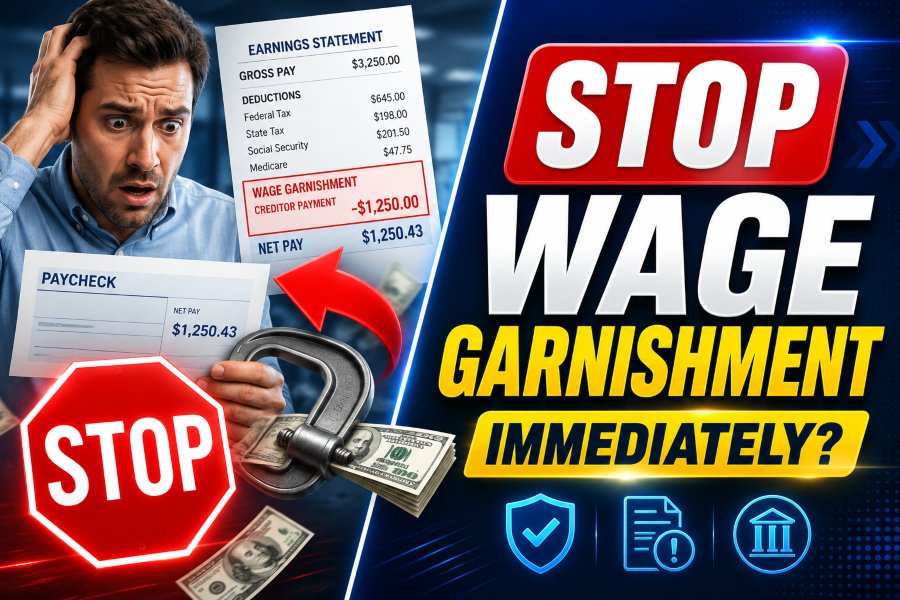
If you are asking, “how can i stop a wage garnishment immediately,” your first move is to slow the panic and act before the next paycheck is processed. Wage garnishment can feel like someone has reached directly into your income, but you still have options if you respond quickly and understand the process.
In most consumer-debt cases, a creditor must sue you, win a judgment, and get a garnishment order before your employer withholds wages. Federal law generally limits ordinary wage garnishment to the lesser of 25% of disposable earnings or the amount above 30 times the federal minimum wage, though child support, taxes, and student loans can follow different rules. (DOL)
What Wage Garnishment Means For Your Paycheck
Wage garnishment is a legal collection method that allows money to be taken from your paycheck before you receive it. Your employer sends the withheld amount to the creditor, court, agency, or collection authority listed in the order.
For regular consumer debts, such as credit cards, medical bills, and personal loans, garnishment usually follows a lawsuit and court judgment. You should read every court notice carefully because the fastest way to lose options is to ignore a deadline.
Disposable earnings are not the same as your gross pay. They usually mean the amount left after legally required deductions, such as federal taxes, Social Security, Medicare, and state taxes.
A garnishment can damage your budget quickly because rent, utilities, transportation, childcare, and groceries do not pause while a creditor gets paid. Legal problems can also overlap with family, medical, or business issues, which is why people often compare options through a trusted legal services provider when they need a clearer view of the next step.
How Can I Stop A Wage Garnishment Immediately?
The fastest possible answer depends on where you are in the process. If garnishment has not started, you may still be able to negotiate, settle, request a payment plan, or respond to the lawsuit before an order reaches your employer.
If garnishment has already started, your strongest urgent options are usually filing a claim of exemption, objecting to the garnishment, negotiating with the creditor, paying or settling the judgment, or filing bankruptcy. Bankruptcy can stop many collection actions through the automatic stay, but it is a serious legal decision and should be reviewed carefully.
Start by identifying the debt type. Credit-card debt, medical debt, child support, tax debt, and federal student loans do not always follow the same rules.
Next, call the court clerk or review the notice to find your deadline. Many objections and exemption claims must be filed quickly, and missing the deadline can make immediate relief harder.
Then gather proof of income, expenses, dependents, benefits, and hardship. The more organized your evidence is, the easier it becomes to show why the garnishment is wrong, excessive, or financially devastating.
Check Whether The Garnishment Is Legal
You should not assume a garnishment is correct just because it looks official. Mistakes happen, and some garnishments can be challenged if the creditor used the wrong amount, sued the wrong person, failed to serve you properly, or tried to collect a debt that is already paid.
Look at the name of the creditor, the court case number, the judgment amount, and the date the judgment was entered. If any detail looks unfamiliar, request court records and compare them with your own documents.
You may have grounds to object if the debt is not yours, the balance is inflated, or the creditor violated required procedures. You may also object if the garnishment takes more than the law allows.
Federal rules protect part of your income, but state laws may offer stronger protection in some places. That means a garnishment that looks legal under a basic federal calculation may still be limited by your state’s exemption rules.
Do not rely on verbal promises from a collector when your paycheck is at risk. Get agreements in writing, keep copies of every filing, and confirm whether the employer has received updated court instructions before assuming the garnishment has stopped.
File A Claim Of Exemption If You Cannot Afford Basic Needs
A claim of exemption asks the court to protect some or all of your wages because the garnishment leaves you unable to meet essential living expenses. This can be one of the most practical emergency tools if you support children, pay high rent, have medical costs, or rely on limited income.
The exemption process varies by state, but it usually requires a form, financial details, proof of income, and proof of expenses. You may need to show pay stubs, bank statements, rent receipts, utility bills, childcare costs, medical bills, and benefit letters.
Certain income may be protected from garnishment, especially benefits such as Social Security, disability, unemployment, or public assistance. These protections can become complicated when exempt money is mixed with other funds in a bank account.
A judge may reduce the garnishment, pause it, or stop it if your evidence supports the request. You should be honest and detailed because vague hardship claims are weaker than clear numbers.
Filing an exemption does not always erase the debt. It simply asks the court to recognize that taking wages right now would create serious hardship or violate income-protection rules.
Call The Creditor Before The Next Payroll Runs
Calling the creditor may feel uncomfortable, but it can sometimes stop or reduce damage faster than waiting for another paycheck to be hit. Creditors often prefer steady payments over repeated court action, especially if you can offer a realistic plan.
Before you call, decide what you can truly afford. A payment plan that looks good today but fails next month can restart collection pressure and make future negotiation harder.
Ask whether the creditor will release, suspend, or reduce the garnishment in exchange for a lump-sum settlement or written payment agreement. If they agree, request a signed document before sending money.
Do not promise money needed for rent, food, utilities, medication, or transportation. A creditor may push hard, but your agreement must fit your real budget.
Keep your tone calm and practical. You are not begging; you are proposing a workable solution that may save both sides time and legal expense.
Request A Hearing When Something Looks Wrong
A hearing gives you a chance to explain your objection to a judge. You may request one if the garnishment is improper, the amount is wrong, the debt is not yours, you were not served correctly, or exemptions apply.
Read your garnishment notice for hearing instructions. Some courts require you to file a written objection within a short period, and others provide a specific exemption or motion form.
Bring proof, not just frustration. Judges need documents that show income, expenses, dependents, benefit sources, payment history, or errors in the creditor’s claim.
If you were never properly notified of the lawsuit, say that clearly and provide any evidence showing your address, mailing issue, or lack of service. Improper service can matter because you must have a fair chance to respond before a judgment is entered.
A hearing may not eliminate the debt completely. However, it can reduce the garnishment, delay collection, correct the amount, or force the creditor to prove its right to take wages.
Consider Bankruptcy Only After Reviewing The Full Picture
Bankruptcy can be one of the fastest ways to stop many wage garnishments because filing can trigger an automatic stay. The automatic stay is a court protection that pauses most collection actions, including many lawsuits, calls, letters, and garnishments.
Chapter 7 may help if most of your debt is unsecured and you qualify based on income, assets, and other rules. Chapter 13 may help if you have steady income and need a structured repayment plan over several years.
Bankruptcy is not the right answer for every garnishment. Child support, many tax debts, recent debts, student loans, and court-ordered obligations may require special analysis.
You should also consider the long-term effects on credit, property, co-signers, and future borrowing. Stopping a garnishment quickly is valuable, but the remedy should not create a larger problem than the one you already face.
If you are close to eviction, vehicle repossession, utility shutoff, or multiple lawsuits, bankruptcy may deserve immediate review. If the debt is small and affordable through settlement, a narrower solution may be better.
Know Which Debts Have Different Garnishment Rules
Not all garnishments are treated the same. Ordinary consumer debts usually need a court judgment, but child support, taxes, and some federal student-loan collections can involve different procedures.
Child support can allow a much higher percentage of disposable earnings to be withheld than ordinary consumer debt. Federal law allows up to 50% or 60% in some support cases, depending on whether you support another spouse or child, and even more may apply when payments are overdue.
Tax debts can also move differently because government agencies may have administrative collection powers. You may still have options, such as payment plans, hardship requests, or appeals, but the process is not always the same as a credit-card lawsuit.
Federal student-loan garnishment can involve administrative wage garnishment without the same kind of court judgment used by private creditors. Borrowers often need to act during the notice period by disputing the debt, requesting a hearing, rehabilitating the loan, consolidating, or arranging repayment.
The debt type tells you which door to open first. Treating every garnishment like a credit-card judgment can waste time and weaken your response.
Protect Exempt Benefits And Bank Accounts
Wage garnishment is not the only collection threat. Some creditors may also try to freeze or levy bank accounts, which can become urgent if your paycheck, benefits, and savings sit in the same account.
Protected benefits may include Social Security, disability, veterans’ benefits, unemployment, and certain public assistance payments. These funds are often safer when they are clearly traceable and not mixed with large amounts of nonexempt money.
If your account is frozen, contact the bank and court immediately to ask about exemption procedures. You may need to file documents proving the source of the funds.
Keep direct-deposit records, award letters, and bank statements that show where protected money came from. Courts and banks usually need evidence before they release funds.
Do not move money in a way that looks deceptive. The goal is to protect legally exempt income, not hide assets from a lawful judgment.
Build A Fast Action Checklist
When your paycheck is at risk, you need a simple plan you can follow without overthinking. Start with the notice, because it tells you who is collecting, how much they claim, which court is involved, and what deadline applies.
Use this checklist as your first response:
- Read the garnishment notice from top to bottom.
- Confirm the creditor, case number, court, and judgment amount.
- Check whether the debt is yours and whether the balance is accurate.
- Call the court clerk to ask which forms apply.
- File an objection or exemption claim before the deadline.
- Gather pay stubs, bills, benefit letters, and bank records.
- Contact the creditor only with a realistic payment offer.
- Get every agreement in writing before relying on it.
This checklist will not replace legal advice, but it helps you move in the right order. Acting quickly gives you a better chance of stopping or reducing the garnishment before more income disappears.
Avoid Mistakes That Make Garnishment Worse
The biggest mistake is ignoring the lawsuit before garnishment begins. Many people lose by default because they never answer the complaint, even when they may have had defenses or negotiation options.
Another mistake is waiting until payroll has already processed the next deduction. Employers usually follow court orders, so they may not stop withholding unless they receive proper written instructions.
Do not quit your job just to avoid garnishment. Losing income can create bigger problems, and the creditor may pursue other collection methods.
Do not send a large payment without a written agreement that explains what the payment does. You need to know whether it settles the debt, pauses garnishment, reduces the balance, or simply counts as a partial payment.
Avoid payday loans and high-cost emergency borrowing. Replacing one garnishment with a predatory loan can trap you in a deeper cycle.
Rebuild Your Budget After The Garnishment Stops
Stopping the garnishment is only part of the recovery. You also need a plan that prevents the same creditor or another unpaid account from creating a new emergency.
Start by listing every debt, minimum payment, interest rate, collector, and court status. Separate urgent legal debts from regular bills so you know what needs immediate action.
Create a bare-bones budget for the next 60 to 90 days. Focus on housing, food, utilities, transportation, insurance, childcare, medication, and court-required payments.
Then decide whether to use debt settlement, a debt-management plan, consolidation, bankruptcy, or direct negotiation. The best choice depends on your income, debt amount, credit goals, and whether lawsuits are already active.
Once the emergency passes, check your credit reports for errors and outdated information. Correcting reporting mistakes will not erase a valid garnishment, but it can support your long-term financial recovery.
When You Should Get Legal Help Quickly
You should get legal help quickly if the garnishment leaves you unable to pay rent, buy food, afford medication, or care for dependents. You should also seek help if you were never served, the debt is not yours, or the creditor is taking more than allowed.
Legal help is especially important when multiple debts, lawsuits, tax issues, support orders, or bank freezes happen at the same time. These situations can overlap in ways that are difficult to solve with one phone call.
Many communities have legal-aid programs, courthouse self-help centers, and nonprofit credit-counseling agencies. Even one short consultation can help you understand whether exemption, objection, settlement, or bankruptcy makes the most sense.
Bring every document to the consultation. Notices, pay stubs, bank statements, benefit letters, court papers, and collector letters can change the advice you receive.
The faster you organize the facts, the faster someone can help you choose the right remedy. In garnishment cases, time is not just money; it is your next paycheck.
Conclusion
How can i stop a wage garnishment immediately? You stop it by acting fast, reading the notice, identifying the debt type, checking for errors, filing exemptions when hardship applies, and negotiating only when the agreement truly protects your paycheck.
You may be able to reduce or stop garnishment through a court objection, claim of exemption, payment agreement, settlement, or bankruptcy filing. The right move depends on whether the debt is consumer debt, child support, tax debt, or student-loan debt.
Do not ignore deadlines, and do not rely on verbal promises when your income is being withheld. Gather documents, file quickly, and get qualified help when the garnishment threatens your basic needs. A wage garnishment feels overwhelming, but a focused response can protect your income and give you a path back to financial control.